
Dry ice spray foam insulation removal gives UK homeowners, property investors, landlords, and sellers a solid way out when spray foam in the roof or loft starts causing headaches. Blasting solid carbon dioxide pellets at high speed lifts the foam away cleanly, without aggressive chemicals or hours of heavy scraping that could nick the timbers. Plenty of property owners go for this because it leaves things tidy and does far less harm to the original structure.
Spray foam seemed like a smart shortcut back when it first caught on. Installers would blast it straight onto the roof timbers and under the tiles. Problems cropped up later blocked vents, trapped damp. Now more folks are looking for proper help to undo the mess and safeguard what their place is worth.
Spray Foam Insulation Problems in UK Homes
Spray foam tends to stick hard and swell out to fill every gap. After a while that tight seal cuts off proper airflow through the loft. The moisture begins to accumulate on the wood, creating conditions for mold growth, which may go unnoticed initially. Open cell foam functions similarly to a sponge during times of humidity. Closed cell foam creates a rigid barrier that may cause stress to the roofing structure in the long term. Either way, it hides the true state of the timbers from surveyors, which raises all sorts of red flags about safety. You often see condensation forming on the underside of the roof after the foam goes in. That poor ventilation goes against UK building regs that insist on decent air movement in roof spaces. Official studies have flagged the extra moisture risk, especially when the foam sits right against modern underlays or coverings that don’t let things breathe.
Oddly enough, some homeowners end up with higher energy bills even after the insulation went in. The foam can shrink or peel away in places, leaving hidden air pockets that undo the good work. In older houses the heavier closed-cell type adds extra load that speeds up wear on the timbers.
Mortgage and Property Sale Issues Caused by Spray Foam
Spray foam has become a real stumbling block when it comes to selling or financing a home. Roughly a quarter of the UK’s major mortgage lenders simply won’t touch properties with foam in the roof. Equity release companies often say no as well. Surveyors can’t properly check the timbers buried under the foam, so they note the limitation and suggest extra inspections. Lenders then either turn down the application or knock 10-20% off the valuation. Sellers sometimes have to drop the price sharply for cash buyers or watch the whole deal fall through. There are extended vacancy periods and high repair costs due to this issue for investors and landlords. The buyer is deterred from even considering buying once the answer comes back from the bank.
The Royal Institution of Chartered Surveyors has pointed out how uncertain installation quality affects valuations. These days many lenders insist on complete removal plus proper certification before they’ll lend. Guidance from the Homeowners Alliance backs up how common these headaches have become. Once the foam is properly cleared, mortgage eligibility often comes back. Buyers can approach normal lenders again, and sellers frequently see quicker sales and stronger offers.
Why Choose Dry Ice Spray Foam Insulation Removal
Dry ice spray foam insulation removal has become one of the smarter choices among the safer removal options out there. This is done by shooting pellets of dry ice which freeze the foam upon impact, causing it to become brittle and allowing it to be chipped off. These pellets just transform into vapor and disappear without leaving any debris that needs cleaning up. This method performs effectively when dealing with both open cell foam as well as closed cell foam. Pressure varies according to the density of the foam and substrate material, such as wood rafters or tiles. Done right, the wood and other surfaces stay largely untouched.
Key benefits include:
- Non-toxic foam removal method with no chemical residues
- Eco-friendly insulation removal that produces zero blast media waste
- Fast coverage of large attic areas compared to manual scraping
- Minimal disruption to daily life in residential properties
Suitability for dry ice blasting for insulation in tight loft spaces
Most house jobs wrap up in just a few days. Because there’s no water or solvents involved, you avoid long drying times and the extra chance of mould setting in afterwards.
How the Dry Ice Blasting Spray Foam Insulation Removal Process Works
The procedure normally begins with an inspection of the loft in order to understand the type of foam, its thickness, and where it is located. It must be noted at the very beginning that everyone’s safety should be the priority when undertaking such a task; therefore, all precautions are taken into account so that the safety of the workers and even the whole house is ensured. Then, the blasting machine blows the dry ice pellets. The intense cold makes the foam shrink and crack. The force from the pellets knocks it loose without chewing into the wood underneath. They work methodically, section by section, so nothing gets missed.
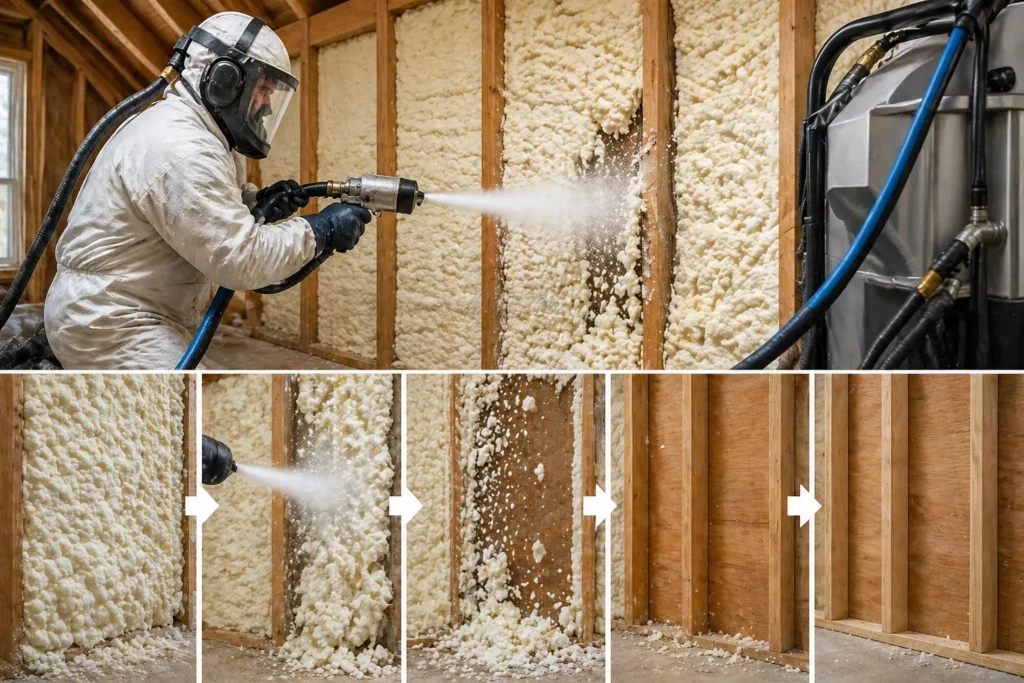
Once it’s off, they vacuum up any leftover particles and give everything a close check for remaining spots or any damp or damage in the timbers. If repairs are needed, they’ll flag them. In the end the loft can breathe again, back in line with building regulation standards. This method proves especially useful for stubborn closed-cell foam that fights other techniques. It also copes well in pitched roofs or spots where access is tight.
Advantages of Dry Ice Blasting Over Traditional Methods
Traditional approaches involve processes that may include scraping, cutting, and chemical solutions. This will lead to the formation of dust clouds, possible risks of damaging the wood, and generation of piles of waste material, which will end up in the dump. It will take time and carry risks of injury. However, the dry ice blasting process avoids all those difficulties for you. You will have successfully stripped the foam coating off your walls, having not used any chemicals on them. Consequently, the next process of applying insulating material is possible. No dust will be left afterwards, causing any troubles in the future. This approach is highly appreciated by homeowners because it is fast and clean. Businesses gain great advantages from minimal downtime required for work.
Professional Foam Removal Experts and What to Expect
Good foam removal experts bring proper training on the dry ice gear plus solid knowledge of building safety. However, their approach involves assessing each job on its own merit and providing quotations which are straightforward, considering the extent of the roof, quantity of foam insulation, and ease of access. The average cost range to remove insulation ranges from £20 to £50 per square meter. Some of the issues that can affect the costs of foam insulation removal include the height of the loft and thickness of the foam.
Reliable firms hand over certificates once the work’s done. These papers show the foam has been fully cleared and can make all the difference with mortgage paperwork. A few even line up independent surveys to double-check everything. Elite Spray Foam Insulation Removal focuses on safe methods right across the South West. Our crews handle residential foam insulation removal and commercial spray foam removal while keeping day-to-day life as normal as possible.
Industry Insights on Spray Foam and Removal Trends
UK authorities keep an eye on spray foam through research into how moisture behaves in timber roofs. They’ve noted that poor installation ramps up condensation risks. If the original guarantee still applies, homeowners can sometimes chase the installer for fixes. Lenders keep tightening their rules. Quite a few now want clear evidence of removal before they’ll move forward with any loan. Sellers who sort it early often avoid months on the market and last-minute price cuts.
Demand for spray foam insulation removal looks set to stay strong as more people hear about the issues. Buyers and valuers are paying closer attention to lofts during any transaction these days. Fresh insulation options lean toward materials that actually let air move while still helping with energy efficiency. After clearing the old foam, owners can switch to products that tick the current boxes.
Safe Insulation Removal Techniques and Best Practices
Safe insulation removal techniques always begin with a detailed site check. Teams look out for things like asbestos in older buildings or wiring running close to the foam, then cordon off the work zone to keep debris contained. They run negative air pressure setups to clean the air and look after anyone nearby. The waste foam heads to licensed sites that deal with construction rubbish properly. That way there’s less risk of it causing environmental trouble.
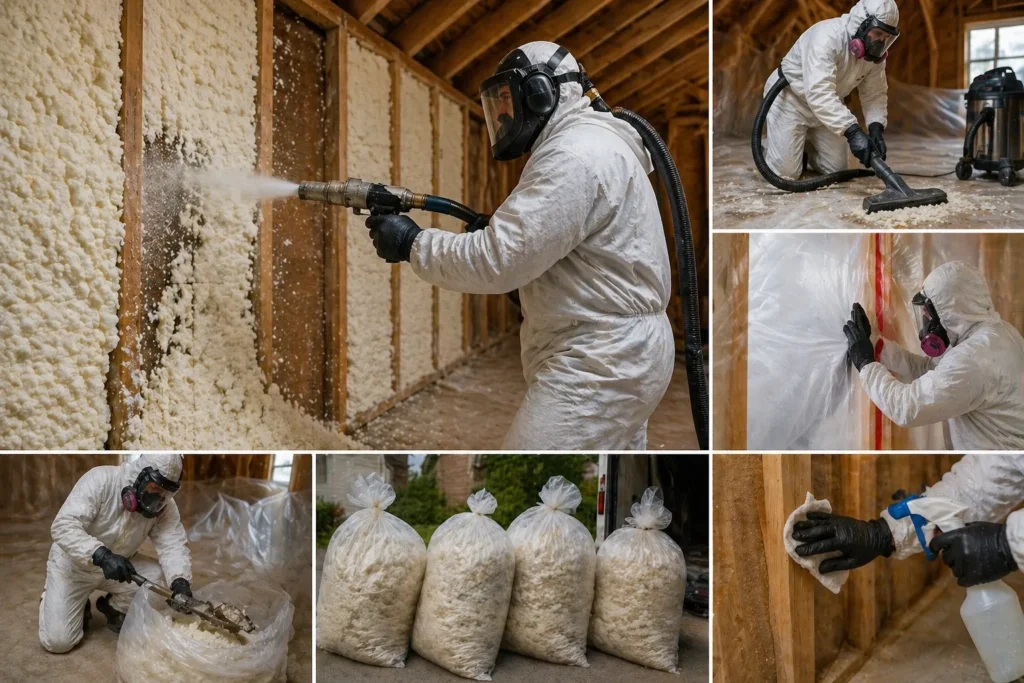
Once the dry ice blasting is finished, the advice is usually to improve ventilation and put in suitable new insulation. Getting that order right brings the roof back to a safe, working state. Homeowners do best picking contractors who’ve done plenty of dry ice blasting spray foam insulation removal before. Checking references and seeing before-and-after pictures can give real confidence in the quality.
Reach Us In South West England
Homeowners, landlords, and investors across the South West can sort out spray foam troubles without too much fuss. Elite Spray Foam Insulation Removal provides expert dry ice spray foam insulation removal locally. Our teams know the typical roof styles and weather patterns in the region. Get in touch today for a free assessment and insulation removal cost estimate. We’ll help you open up mortgage options again and look after the value of your place. Head to Elite Spray Foam Insulation Removal to arrange your survey.
Property sellers sleep easier before they put the house on the market. Landlords keep their rentals up to scratch. Investors make sure their assets stay on track.
FAQ Section
What is dry ice spray foam insulation removal?
Dry ice spray foam insulation removal uses frozen carbon dioxide pellets to lift spray foam from roof timbers and tiles. The pellets freeze the foam and cause it to separate cleanly.
Is dry ice blasting spray foam insulation removal safe for timber?
Yes. Trained operators control pressure to avoid damage. The method is gentler than scraping and leaves surfaces intact.
How long does residential foam insulation removal take?
Most attic spray foam removal jobs finish in 2 to 5 days depending on property size and foam volume.
Does dry ice blasting foam removal help with mortgage problems?
Yes. Full removal and certification often satisfy lenders and surveyors. Properties regain standard mortgage eligibility.
What are the costs of professional foam removal experts?
Prices vary by area and scale. Expect £20–£50 per square metre. We provide accurate quotes after site visits.
Is this an eco-friendly insulation removal option?
Dry ice blasting produces no secondary waste. Pellets evaporate into gas, which makes it one of the cleanest non-toxic foam removal methods.
Can you remove closed-cell foam insulation with dry ice?
Yes. The technique handles dense closed-cell foam effectively when technicians adjust settings for the material.
Do I need to leave the property during the spray foam extraction process?
We recommend temporary relocation for safety during active blasting. Teams complete most work in contained sections.
What happens after dry ice cleaning for construction?
Experts inspect and clean the space. You can then install new breathable insulation that meets regulations.
Are there risks with DIY spray foam removal?
DIY attempts often damage roofs and create health hazards. Always use professional foam removal experts.