
Flat roof spray foam insulation removal fixes real headaches for many UK homeowners right now. Poorly applied foam traps moisture against roof timbers. It hides potential rot and blocks proper surveys. Lenders notice these issues fast. You might face this if you bought a property with existing insulation or added it years ago for energy savings. Now it sits in the way of selling, remortgaging or simply sleeping easy about your roof’s condition. Professional flat roof spray foam insulation removal sorts it cleanly when done right.
Why flat roof spray foam causes problems
Spray foam sticks hard to surfaces. On flat roofs it often covers the deck, joists and membranes. Surveyors cannot inspect the timbers underneath for damp, rot or structural wear. Many lenders treat this as a red flag. Major UK banks now refuse loans on properties with spray foam on the roof. Some reject outright. Others demand full removal plus proof the structure stays sound. Equity release firms prove even stricter. Your property can lose value or become hard to sell until the foam disappears.
Moisture sits at the heart of it. Foam can trap condensation if the original install skipped proper vapour control or ventilation. Over time this leads to damaged spray foam roof timbers, mould and expensive repairs. Open cell foam lets some vapour through but still causes headaches. Closed cell foam seals tighter and creates bigger removal challenges.
Homeowners report the same story. They installed foam to cut bills. Years later buyers walk away because mortgage offers fall through. Landlords watch rental properties sit empty. Sellers drop prices to cover removal costs.
Mortgage and property sale issues explained
RICS surveyors flag spray foam because they cannot see the full roof structure. Their reports often note limited inspection. Lenders read that and pause or decline. A quarter of big providers now avoid these homes completely. Others review case by case but still push for specialist checks. You feel the pinch most when selling or remortgaging. Buyers need finance. Without it deals collapse. Property investors and landlords face the same barrier when refinancing portfolios.
Even if your foam looks fine today, future buyers or valuers will question it. The safe route involves professional foam insulation removal followed by clear documentation. This restores mortgageability and buyer confidence.
Open cell versus closed cell foam removal
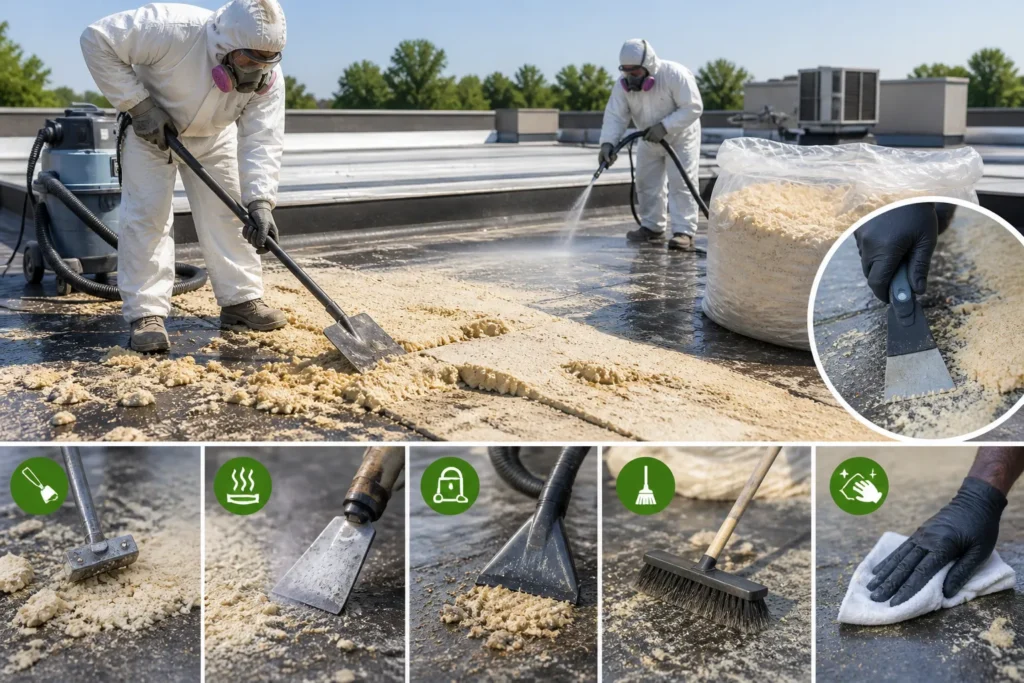
Open cell foam feels softer and lighter. It expands more and fills gaps easily. Removal usually needs hand tools, scrapers and careful cutting. Technicians peel sections away without heavy machinery in many cases. Closed cell foam sits denser and harder. It bonds strongly and resists water. You need tougher methods here. Dry ice blasting or specialist mechanical tools break the bond cleanly. This approach avoids damaging the flat roof deck or timbers underneath.
Both types create dust and debris during removal. Professionals contain the mess with sheeting, extraction and proper PPE. Never tackle this yourself. You risk breathing in particles, damaging the roof and voiding any future guarantees.
The professional spray foam removal process
Experts follow clear steps for safe results.
- First they survey the roof. They identify foam type, thickness, condition and any existing damage. They check access points and plan containment.
- Next comes protection. Teams seal off the work area to stop debris spreading into living spaces. They set up ventilation and dust extraction.
- Removal itself varies by foam. For open cells they cut and lift sections. For closed cells they use controlled methods that shatter the foam without harming substrates. They work section by section to keep everything stable.
- After stripping the foam they inspect every timber and surface. Moisture readings go on record. Any rot or repairs get quoted separately.
- Finally they clear all waste. Licensed carriers handle disposal according to UK rules. You receive documentation that proves the job met standards.
- The whole spray foam removal process usually takes a few days depending on roof size and access. Flat roofs can need extra care around edges and falls.
Spray foam removal cost UK
It is expected that prices would range between £20 and £50 per square meter. An average three-bedroom home that occupies a space of about 80 square meters can incur an additional cost of between £3,000 and £4,000 due to removal charges alone. Other factors which would contribute to increased prices include the size or complexity of the flat roof as well as its removal.
Get three detailed quotes from experienced contractors. Cheap prices often skip proper containment, inspection or waste handling. You pay later through rejected mortgages or botched roofs. Factor in roof restoration after foam removal too. You may need new vapour barriers, ventilation upgrades or fresh insulation. Budget for these to avoid half-finished work.
The effective spray foam removal techniques that are safe
The professionals do not go for harsh chemicals or powerful tools. The proper mechanical method along with appropriate blades and suction systems leaves the timbers intact.Always choose insulation removal contractors who specialise in this work. General roofers might handle small patches but full flat roof jobs demand specific skills and equipment.
Look for firms that provide before and after surveys plus written guarantees. They need to be able to provide specific information about how they keep your property safe and take care of waste. It is possible to find environmentally friendly methods for foam removal. Some companies aim to utilize chemicals minimally and recycle responsibly.
Roof restoration and insulation upgrade after removal
Removal leaves your flat roof ready for proper treatment. You can install modern breathable insulation that meets current standards. This often improves thermal performance without the old risks. Options include rigid boards, mineral wool or new membrane systems designed for flat roofs. Good ventilation becomes essential. Pair it with correct falls for drainage. Many homeowners upgrade fully during this window. You fix any hidden damage at the same time and end up with a drier, more efficient roof. Professional teams can handle both removal and replacement in coordinated works.
Insulation disposal regulations
Spray foam waste needs correct classification. UK rules treat some insulation as hazardous depending on its makeup. Licensed carriers must transport it to approved sites. Good contractors manage this for you. They provide waste transfer notes and confirm compliant disposal. Never let anyone dump it illegally. You carry responsibility as the producer of the waste.
Why choose professional foam removal services
DIY attempts create more problems than they solve. You damage felt, crack timbers or spread dust everywhere. Lenders want evidence of proper work by qualified teams. Experienced spray foam removal services know the exact standards surveyors demand. They deliver reports that help mortgage applications succeed. They also spot issues early and quote repairs accurately.
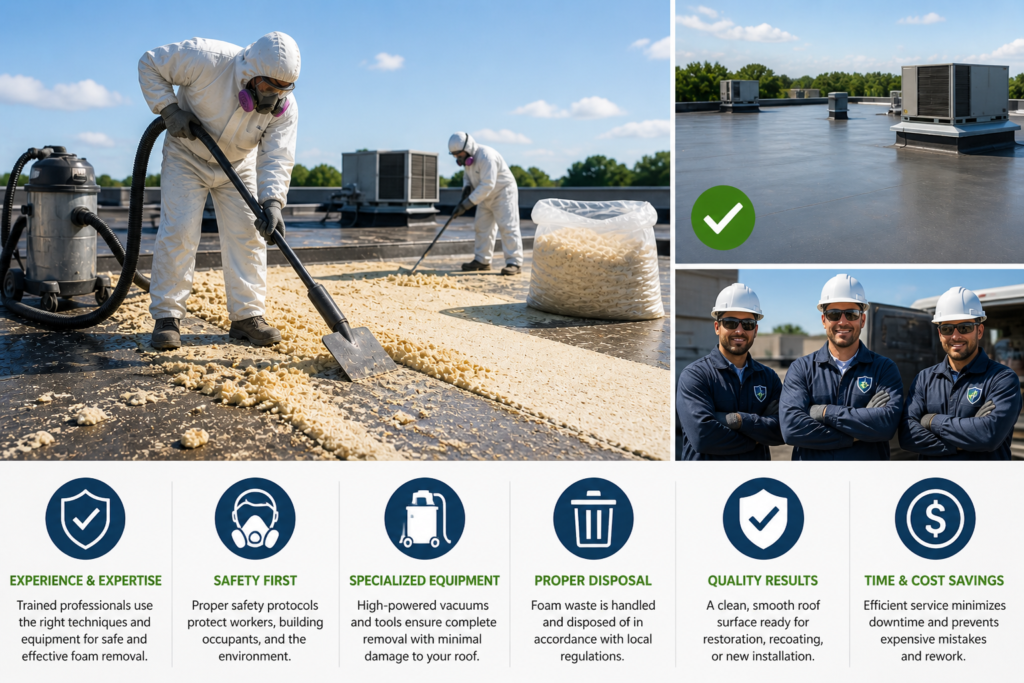
You get peace of mind. The job finishes once with minimal disruption. Your roof returns to a known, inspectable condition. At Elite Spray Foam Insulation Removal we handle flat roof jobs across the UK. Our teams specialise in safe, documented removal that satisfies lenders and surveyors. Contact us for a survey and clear quote. We also offer closed cell foam removal and open cell foam removal tailored to your roof type. Many clients combine this with full roof restoration after foam removal for a complete fix.
Common mistakes to avoid
Rushing into the cheapest quote usually backfires. Unqualified crews leave residue that still blocks inspections. They skip proper waste handling or damage the structure. Ignoring the need for post-removal upgrades leaves you with a stripped roof that performs worse than before. Always plan the replacement insulation at the same time. Waiting until you need to sell creates panic pricing. Sort it early if you see mortgage warnings or damp signs.
FAQ
How long does flat roof spray foam insulation removal take?
Most domestic jobs finish in two to five days. Larger flat roofs or those needing repairs take longer. Access and foam type affect timing.
Will removing spray foam damage my flat roof?
Professionals minimise risk with controlled methods and protective measures. They inspect everything afterwards. Poor contractors can cause issues, which is why you choose specialists.
Does removal fix mortgage problems?
Yes in most cases. Full professional removal plus independent inspection and documentation satisfies many lenders. Always confirm exact requirements with your mortgage provider first.
What is the difference in cost between open cell and closed cell foam removal?
A closed cell usually costs more because it bonds stronger and needs specialist techniques. Expect 20-50% higher prices depending on the roof.
Can I sell my house with spray foam still on the roof?
Some buyers pay cash and accept it. Most need a mortgage and will struggle. Removal gives you the widest pool of buyers and better offers.
Is spray foam removal messy?
Professionals contain dust and debris effectively. You might need to clear the loft beforehand. Living areas stay protected with proper sheeting and extraction.
What happens to the waste foam?
Licensed carriers take it away and dispose of it according to regulations. You receive paperwork confirming correct handling.